Design Rate
Units or order lines per hour qualified by SKU mix, order profile, replenishment, peak duration and buffer occupancy.
Rate inputs →
Define load units, SKU and order profiles, peak windows, interface ownership and acceptance evidence before comparing automation concepts. Clear inputs shorten evaluation and protect handover.
Each gate links a project statement to a stated operating condition and a reviewable deliverable—not an unsupported percentage.
Units or order lines per hour qualified by SKU mix, order profile, replenishment, peak duration and buffer occupancy.
Rate inputs →Commands, confirmations, timeouts, alarms and recovery states checked against an agreed interface and test profile.
FAT scope →Installed geometry, live loads, host systems and exception cases exercised with named owners and evidence.
SAT planning →Diagnostics, critical spares, remote access and recovery procedures documented by contracted project scope.
Support boundary →Product selection connects physical equipment with WCS orchestration, PLC handshakes and service access.

Storage commands, location strategy and crane or shuttle interfaces reviewed with selectivity and fire-route constraints.
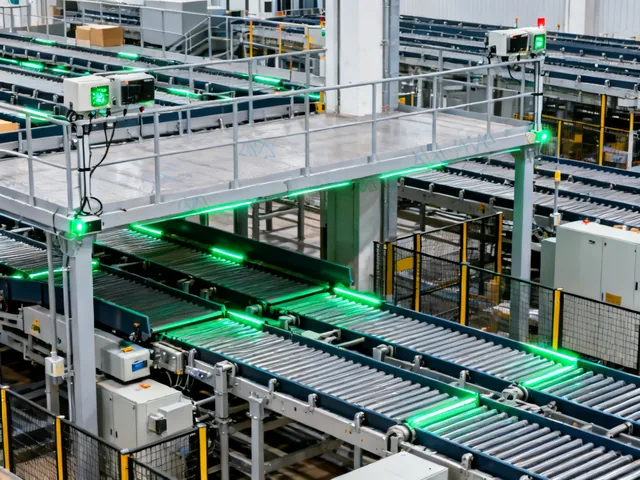
Release logic, divert confirmation, accumulation limits and exception routing treated as one control surface.
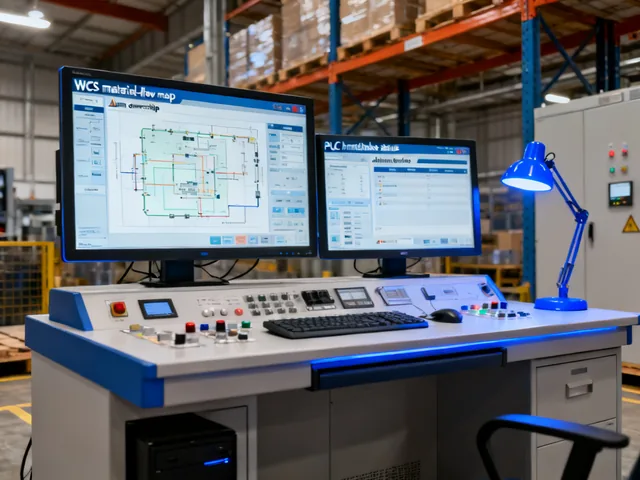
Ownership for missions, inventory state, alarms, retries and recovery documented before interfaces freeze.
Group requirements so throughput, interfaces and site constraints remain separable during RFQ review.
Use the matrix for discovery. Capacity claims require measured demand files, layout and exception logic—not a vertical label alone.
| Environment | SKU depth | Peak factor | Temperature | Load mix |
|---|---|---|---|---|
| E-commerce fulfillment | High and volatile | Promotion-driven surges | Ambient | Totes, cartons, returns |
| Grocery distribution | Broad, high velocity | Wave and cutoff peaks | Ambient / chilled | Cases, totes, roll cages |
| Cold-chain warehouse | Controlled range | Door-window constrained | Chilled / frozen | Pallets, insulated totes |
| Manufacturing logistics | BOM-dependent | Takt and shift peaks | Process-specific | Pallets, kits, returnables |
| Multi-client DC | Contract-dependent | Overlapping customer peaks | Mixed zones | Pallets, cartons, totes |
Deep SKU range, cutoff waves and tote-heavy exception recovery.
Store sequencing across ambient and chilled control zones.
Door timing, sensor limits and insulated load handling.
Takt-linked line feed with high missed-delivery consequence.
Tenant rules that overlap peaks and interface ownership.
A useful concept review begins with actual load units and demand patterns. Share ranges where finals are unavailable; mark assumptions for later validation.
Open the project brief